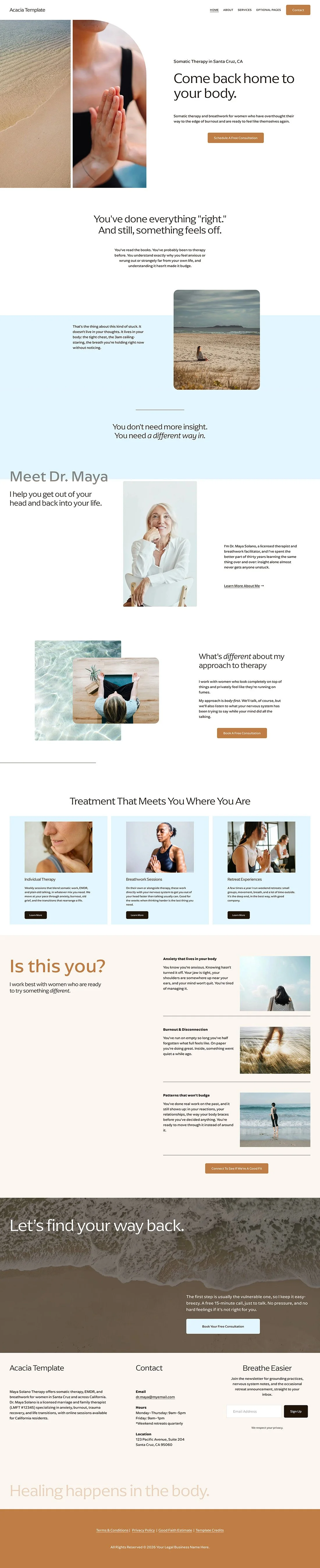
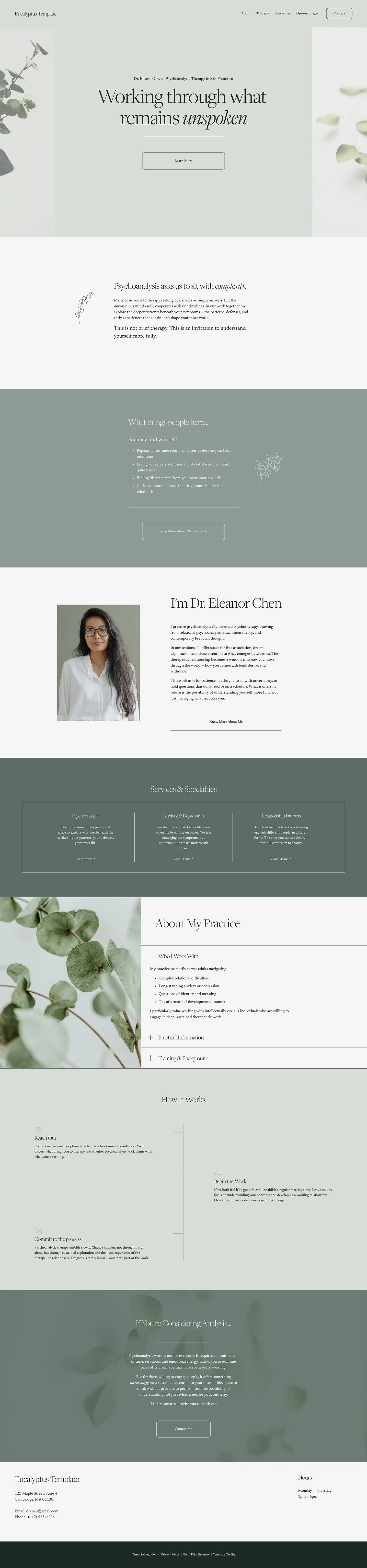
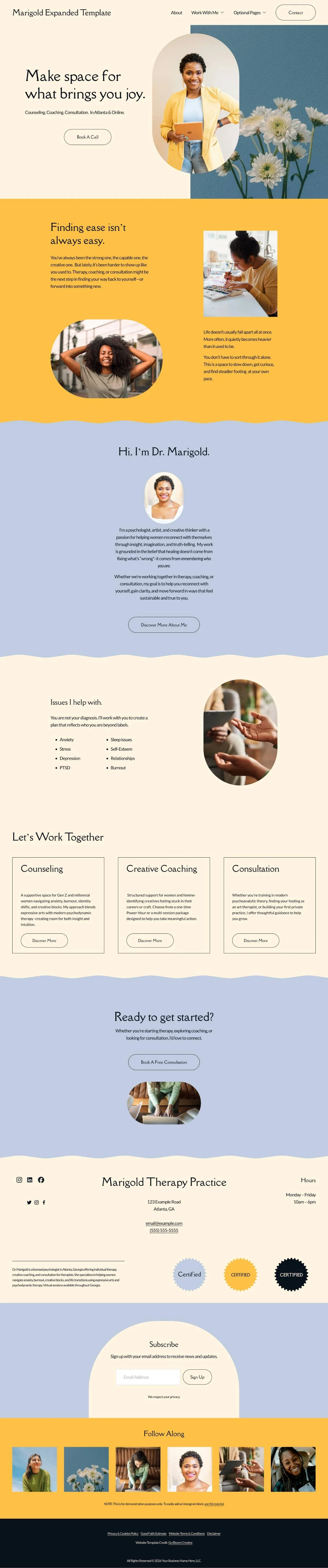
Before You Buy a Therapist Website Template, Read This
A website template can be one of the smartest investments you make for your practice, but only if you're actually ready for one.
Here’s the scenario I want to help you avoid:
You buy a template because the demo looked beautiful, only to find yourself stuck six weeks later with a half-finished site and a mild sense of dread every time you open your website builder.
This post isn't aboutwhich template to pick. It's about whether you're set up to succeed before you ever hit "add to cart."
The Quick Before-You-Buy Checklist
Do I have a clear sense of who my ideal client is?
Do I have at least one crisp, recent, well-lit photo of myself that I feel good about?
Do I have a plan for writing my content?
Am I comfortable enough with tech to give this a try (knowing support is available if I need it)?
Do I have a marketing game plan (knowing that my website is just one piece of the puzzle)?
If you answered yes to most of these, good news, you're probably ready. If a few of these gave you pause, read on for more!
1) Do you know who you're talking to?
This is the most important question on this list, and it has nothing to do with design.
A template gives you the structure. The layout, the pages, the navigation: it's all there. But the words are yours. And if you're not yet clear on who your ideal client is, what they're struggling with, and why your approach is the right fit for them, the copy you fill in will be vague, and a vague website doesn't convert, no matter how beautiful the design is.
Before you buy, ask yourself: do I know who I'm trying to reach? Not just in terms of demographics, but emotionally. What are they Googling at 11pm? What have they tried before? What do they need to hear to feel like you're the right person?
If the answer is "sort of," that's okay, but spend some time on this before you start building. It will make every part of the process easier.
2) Do you have photos of yourself?
No template (no matter how well-designed) can fully compensate for the absence of photos of you.
I still hear therapists push back on this, but here's the reality: people are about to trust you with something deeply personal. They want to see your face before they reach out.
Stock photos of serene nature scenes and generic office settings are a placeholder, not a long-term strategy.
You don't need a full brand photography shoot just to get started. A clean, well-lit headshot (taken by a friend, or using a tripod-don’t do a selfie) is infinitely better than no photo at all. If you're planning a shoot, great. But don't let waiting for the 'perfect' photos stop you from launching.
What you'll want to have ready, at the very minimum:
At least one clear headshot you feel good about
A few “lifestyle” or office photos if you have them-meaning photos where you are in them, but not looking right at the camera (typing, writing, talking, etc)
Stock photos to fill in the gaps (Unsplash is a great free option)
3) Do you have a plan for the written content?
This is where most therapists get stuck. The design feels manageable. The tech feels manageable. And then they sit down to write their homepage and...nothing comes out right. Or everything comes out sounding like every other therapist website they've ever read.
The writing is the part that takes the most time, and it's worth thinking about before you buy.
Your options:
Write it yourself: totally doable, but it comes more easily to some than others. Check out my article on how to write website content for therapy websites.
Hire a copywriter: a bigger monetary investment, but worth it if writing isn't your thing and you have the budget
Use the template placeholder copy as a starting point: my templates include copy prompts and guidance to help you know what to write in each section, so you're never staring at a blank page
Whatever route you choose, have a plan before you start building. Trying to design and write at the same time is a recipe for a trial site collecting dust.
4) Are you ready to DIY or do you need a little support?
Here's the thing about tech: a lot of therapists assume they're not cut out for it, and then they get into Squarespace and completely surprise themselves.
I made a short video showing how I took one of my templates from its original look to something totally different, different colors, fonts, photos, and logo, with no coding required. It's worth watching before you decide whether this feels like something you can handle.
Customizing colors, fonts, and swapping in your photos is straightforward once you're in there. The part that's less intuitive is knowing what to write and how to structure your content–which is a different skill than tech.
If you get in and find yourself stuck (whether it's a technical question, a copy block, or just wanting someone to tell you "yes, this looks right") a Live Support Session is exactly what it sounds like: we get on a call, work through whatever you're stuck on, and you leave with actual progress made.
5) Do you have a marketing game plan?
A lot of people (past versions of myself included!) think: if I build a great website, clients will just find me. And yes, a well-built website absolutely matters, but it's the foundation, not the entire strategy.
Before you buy a template, it's worth asking: how do I actually plan to get in front of people (and how can my website support that)?
For most therapists, the answer is some combination of:
Directories (Psychology Today, etc.)
Word-of-mouth and networking (because real relationships with humans drive referrals in a way no website can replicate)
Digital marketing: social media, blogging, YouTube, podcasting, email marketing, ebooks, courses
SEO (getting found in AI and Google search over time)
These are ways you drive traffic to your site. For example: when someone finds you on a directory, hears about you through a colleague, or stumbles on your Instagram, your website is where they go to decide whether to reach out. It’s the place where the decision happens and the outreach is made.
So, before you choose a template, it helps to know what your marketing plan is (even roughly), because that shapes what your site needs to do. For example, a therapist leaning hard into blogging and SEO might prioritize a robust resources page and a blog. One who gets most of their referrals from colleagues might need a strong, clear services page above everything else.
If you're thinking through what a marketing strategy could look like for your practice, I've written about:
Both worth a read if you're early in the process of figuring this out or feeling stuck
So, are you ready? (Or... not quite yet?)
Go back to that checklist at the top of this post.
If you answered yes to most of it, then it’s time to go shop some templates →
Or start with The Best Squarespace Templates for Therapists (Reviewed by a Former Therapist)
Not quite ready yet? Grab the Free Therapist Website Toolkit →
It walks you through exactly what to pull together before you build: your ideal client, your photos, your pages, your content plan. It's free, it's practical, and it'll save you a lot of staring at a blank screen.