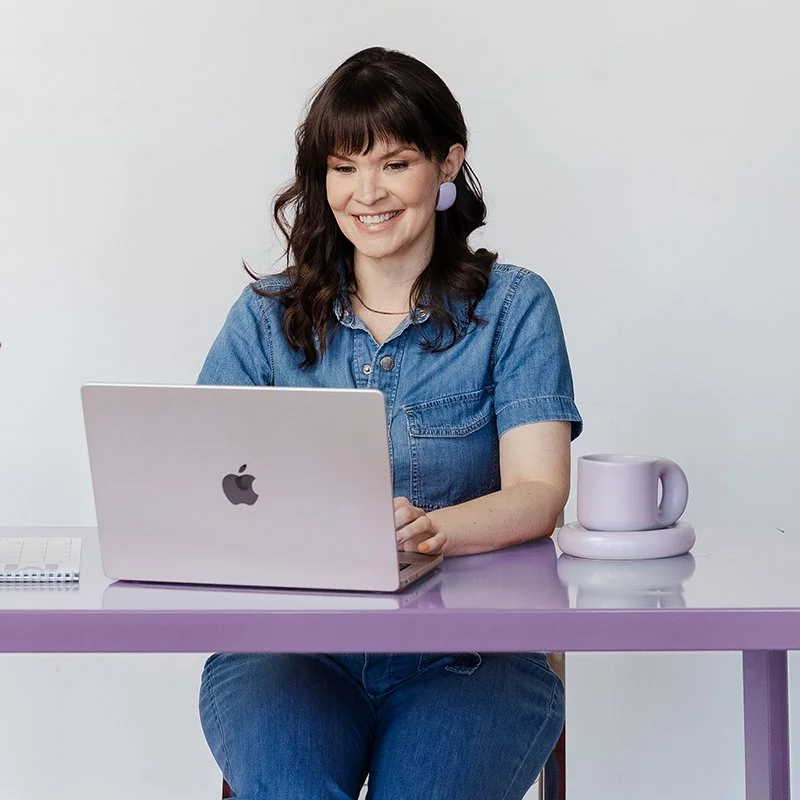
How to Get a Great Headshot as a Therapist

As a therapist, having a great headshot is more important than you might imagine.
“Why do I need a headshot? I’m a therapist, not an aspiring model.”
It’s true, you didn’t get into this field to be admired for your looks. But a headshot is more than a nice picture. It is a vital way to communicate who we are, and what it is like to sit with us.
People make decisions within about 10 seconds of visiting your site whether they are going to work with you and photos are a big part of that.
Your client’s relationship with you starts before you ever meet them in the therapy room. A good photograph can convey a lot about you. Are you more traditional? Or maybe more offbeat? More polished? Or maybe more relaxed?Maybe your client is looking for a therapist of a certain gender, age, race, religion, etc., and perhaps your photo can tell them something about that.
Not convinced? Not sure what a headshot vs. a brand photo is?
Check out this post: Do I need brand photos for my therapy website?
What makes a good or bad headshot?
A “good” or “bad” shot has nothing to do with a judgement physical attributes of the person being photographed. Any human can have a good shot or a bad shot, and it all has to do with the following:
Lighting
If you are working with a photographer, they will be all over this. But if you are DIYing, here’s what you need to know:
Aim for diffuse light, which happens either in the morning or in the early evening just before the sun goes down. Photographers even coined a term for early evening light, called “the golden hour.”
Natural light is key. Unless you have access to a fancy photo studio (which you will be paying a bigger price tag for), Mother Nature does it best.
Again, remember, diffuse light is the way to go. If you are in direct sunlight, you risk either squinting because the sun is in your eyes, or being “backlit”, making it hard to see you well.
Attitude
I know not everyone loves getting their picture taken, and it can be awkward. Here are a few tips that might help:
Meet your photographer before you do the shoot. Having a connection will make the photos come out SO much better.
That being said, the first few photos are usually awkward, don’t worry about it. Know that as you go along in the shoot, you’ll warm up.
Don’t be hangry! This sounds funny, but seriously. Your photos will come out so much better. Eat a snack first (just make sure there isn’t any left in your teeth).
Know that your photographer is not judging your looks. They are thinking about lighting, shadows, F-stops, apertures, or whatever the heck else they think about. It’s another day at the office for them. They are not like, “wow, look at that zit” or whatever you’re self-conscious about.
Look at the camera like you are looking at a friend or another person you care about.
Breathe. Shake it out. Relax your shoulders. Laugh. Put on some of your favorite tunes. Do some yoga. Jump up and down. Think of something funny or bring a funny friend. Anything to loosen up a little. A good photographer should also be able to help you with all of this.
Clothing
A few things to consider with clothing:
The best color to wear is the color you feel most confident in! Any color can really work with the right lighting. The most important part of getting a good shot is that you feel good.
That being said, wear a color that contrasts with your skin tone/hair color, so you don’t have some weird blending situation like “where does their shirt begin and their hair end?” or “wait, is that person naked?”
Avoid camouflaging with your background. Think about your background. Are you taking photos in the woods? Maybe don’t wear forest green or brown. In the city against a brick wall? Maybe don’t show up in your favorite rust-colored top.
Wear something that shows your personality but also keep it somewhat simple. The focus should ultimately be your face, and your giant feather boa or big floppy hat will distract from that (as fabulous as you might look in them). Also keeping it simple means it won’t be dated a year from now.
Bring more than one outfit option. Do a few wardrobe changes! To make this easier, I would suggest wearing separates (rather than something that’s one-piece, like a dress). This way, you can easily change your top and quickly have a whole new look.
Layers look great in headshots, so think about bringing options such as sweaters, blazers, a leather jacket, etc.
If you wear glasses, go ahead and wear them in the photo, or if you want to play around, do some shots without them (remember to bring your contacts if you need them).
Posing
You ultimately want your face to be pretty much straight-on if you’re going for a headshot. If you are doing a more extensive branding shoot then you can get more creative!
If you are feeling awkward, the best thing you can do is sit down and pose from there. You can fold your hands in your lap, cross and uncross your legs, turn your lower body, lean forward, lean back, etc. while having a natural place to put your hands.
If you’re feeling less awkward, you can stand up and have a little more fun with the posing, and if you’re that chill, you don’t need my tips, you’ve probably got moves for days. Show ‘em off! You never know what might end up working.
Make sure you don’t have frozen-face. Shake your face out, move your head from side to side, then re-set. After you hold a smile for a little while it can start to look very frozen or posed, aka not a good look.
Hair, Make-Up & Filtering
When it comes to hair and make-up for a headshot, the aim is to still look like yourself, just a little more polished.
If you’re someone who does wear make-up and you enjoy it, then go for it! You want to strike that balance of highlighting your features without looking like you’re going to a rave (is that a thing still?).
Even if you’re not a make-up person, a little powder to decrease shine from oils or sweat on the face (you can work up a sweat doing this, trust me), maybe a dollop of under eye brightener, and some lip balm can all help the camera do it’s best work.
As for hair, as with make-up, you still want to look like you. Do your hair like you would to go out to a nice dinner, or professional event.
Your photographer can edit out flyaway hairs and blemishes if you’d like.
Or leave them in, be a human being, it’s fine.
The photographer can also do things like blur out wrinkles and contouring. I’m all about people doing whatever they want to do to feel their best, so I’m not here to judge. If you decide to go that route, just make sure the photo doesn’t look so far from what your clients see when they walk into the room because that can be jarring. I would suggest getting some honest feedback from a friend who won’t bullshit you to make sure you haven’t gone too far.
Background & Setting
Just as with outfits, try more than one option for background so you can play around and see what you like best.
Think about what your background conveys. With a city practice maybe more urban background. Are you a yoga therapist in the country? Maybe go for a nature background. No hard and fast rules.
Also, remember that with a headshot the background will be slightly blurry anyway. This is where you want to give some trust over to your photographer to see what’s working and what’s not.
Play around! Sometimes the things that I thought wouldn’t look good were my favorite in the end.
How do I find a photographer?
One of the best things you can do is ask a colleague with a great headshot where they got theirs.
And of course, there’s Google. To narrow the field of results, you can use keywords based on what you are looking for, like “photographer for therapists” “photographer using natural lighting near me” “studio photographer near me” “brand photographer near me” etc.
You may have to set up a call with a few folks to decide who you “click” with the best (Get it? Camera? Click?)
Can I DIY photos for my website?
I get that if you’re just starting off, money might be tight, so you might be thinking of ways to save where you can. Here are some tips to get the best shot you can by yourself:
Natural light still applies. So even if you don’t go outside, do your photos near a window. I would recommend doing it in the morning or early evening the lighting tends to be the best. Depending on your house, certain windows or doorways might be better at certain times of day, so play around.
FOR THE LOVE OF GOD, USE A TRIPOD! It looks really unprofessional when it’s obvious that you are taking a selfie. I would recommend getting your hands on a tripod with a remote. A tripod is something that will hold your camera for you and you use the remote to snap the picture while you’re at a distance. You can buy the set online for around $15 (or borrow someone else’s).
Think about your background. If you’re doing it at home, avoid the bathroom, a sink full of dishes, laundry, or your kids toys in the background. You don’t want anything distracting potential clients from making that call to you. Even having a bunch of books in the background, even if they are therapy books, can be distracting. Try to find a spot with a somewhat more neutral background.
If you have access to an iPhone 8 Plus or higher, you can use the feature called “Portrait Mode” which is built right into the camera. This mode creates an illusion of “depth of field,” aka the blurry background you would get from a real camera. If you don’t own an iPhone 8 Plus or higher, this would be a great time to ask a friend to borrow theirs for a little bit while you snap some shots (bonus: maybe they can snap some of you too!). The increase in quality you can get from this pretty amazing.
If you want to get crazy, there are light rings, and light reflector kits for your cell phone out there, on the cheap, but you don’t really need them. If it’s interesting to you, and you want to play, go for it!
Or, just screw all the rules!
All the tips above are based on having done a few rounds of headshots in my life and being “on set” with colleagues getting theirs. This is a post meant for people who need a headshot and are looking for some guidance on how to get the best results for their money. But if you’re confident, you can rock anything!
And, since this is all about attracting your ideal clients, the number one thing you can do is be yourself and let your personality shine through!