Before You Hire a Web Designer, Ask Yourself This

As a therapist, you wouldn’t start using random interventions without first understanding what is going on with your client, right?
Maybe it’s because I was once a therapist myself, but that’s how I think when a client asks me to redesign their website.
It’s not that I’m trying to talk people out of working with me. Buta new website is a big investment of time, energy, and money. I'd rather go into it with the right “diagnosis” than have you spend thousands of dollars solving the wrong problem.
The key question: “What problem am I really trying to solve?”
Whenever I talk with a potential design client, this is what I’m trying to help them figure out. For example, this month I had 4 new client calls and only one of them actually needed a new site.
To help you get to the bottom of it before you book with a designer, here are the most common problems therapists have with their websites (and the solutions).
The most common therapy website problems
Problem #1: Your website isn’t getting much traffic
Before you assume your design is the problem, ask yourself:
How old is your site? If it's under six months, remember that it can take a while for a new site to show up online (especially if you are in an area with many other well-established therapy practices).
Are you actively building your referral network? There’s so much emphasis on digital everything these days. But when it comes to the business of therapy, real human connections are still top priority.
Do you know your site traffic is a problem, or does it just feel that way? Feelings are data, but they're not always accurate data. If you’re looking for real data, it’s time to check your website analytics-and if you are a total beginner and that sounds like a foreign language, check out How to Know if Your Website is Actually Working.
Did someone tell you that your website is the problem (and do they actually have the expertise or info to do that)? Some marketing “expert” online might give advice, but did they actually look at your metrics? Did they dig into your site structure, your specific niche, your market, your audience? What works for one practice won't necessarily work for another. Before you act on advice, consider the source: are they speaking from a real analysis of your situation, or general guidance?
Possible Solutions
If you want an objective look at your website's health before making a decision, the SEOSpace* app is an incredible, affordable tool I recommend (and use on my own site!). It scans your Squarespace site and gives you a real picture of what's working and what isn't.
And if you'd like a second set of eyes on your site to make a few strategic tweaks without committing to a full rebuild, a Live Support Session might be all you need.
Good ol’ fashion real-world networking: connecting with community partners, staying active on local therapist listservs, nurturing relationships with other providers who refer out. It doesn't feel very 21st century, but it works–and it works faster than waiting for Google to notice you. Check out Private Practice Marketing Strategies That Actually Feel Good for more ideas.
Problem #2: You're getting clients, but not the right fit
While your branding (like colors, fonts, photos) do communicate to your ideal client-sometimes it’s not the look, it’s the messaging.
Maybe the written content is too generic, too vague, or just not quite you –and because of that you might be getting clients who are looking for “a therapist” but not neccessarily for YOU. This can show up as inquiries from people outside your niche, clients who ghost after the initial intake, or a general feeling that the people finding you just aren't quite right.
If you're still figuring out who your ideal client is, what makes your approach different, and how to articulate what it's actually like to work with you–a new design won't fix that. The site will look beautiful but the words aren’t going to resonate with the right folks.
Possible Solutions
Check out this post: How to Write Website Content That Actually Connectsand do the exercises to get clarity.
Work with a copywriter or brand messaging strategist 1:1 if you have the budget and can’t DIY it.
Problem #3: People are coming to your website, but they aren’t contacting you.
If plenty of people are landing on your site but they’re leaving without contacting you, the issue is almost always one of these three things:
The user journey is unclear. Visitors don't know where to go or what to do next. It’s vital to guide your visitors through a process from entry point to contact by using a clear call to action on every page and making your site easy to navigate.
Your contact information is buried. If someone has to hunt for your contact form or scroll to the bottom of the page to find your email, many of them might get frustrated and leave. Your call to action should be visible and easy to find from every page of your site. Rule of thumb: They should not need to click more than once to find it.
The written content isn't connecting. The writing might be too clinical or too generic to make the right person feel seen. If your ideal client lands on your page and doesn't think "this person gets me," they'll keep searching.
Possible Solutions
Before you jump to a rebuild, audit the experience: navigate your own site like a stranger would. Is it obvious what you do, who you help, and how to reach you within the first few seconds?
Work on your copy before investing in a redesign.
Problem #4: Your site is outdated
This one has two flavors, and they lead to different solutions.
The content is outdated. Your specialties have shifted. Your fees changed. You're no longer accepting the insurance you listed. You added telehealth. The copy you wrote three years ago doesn't reflect the therapist you are now. This doesn't necessarily require a full redesign it might just need a focused update to bring the content current.
The design is outdated. The aesthetic feels old, the layout feels clunky, or it was built on a free template that's showing its age. Sometimes this is a styling refresh. Sometimes it's a full rebuild especially if the structure itself is working against you.
The question to ask: is it the content, the design, or both? The answer determines the scope of what you need.
Possible Solutions
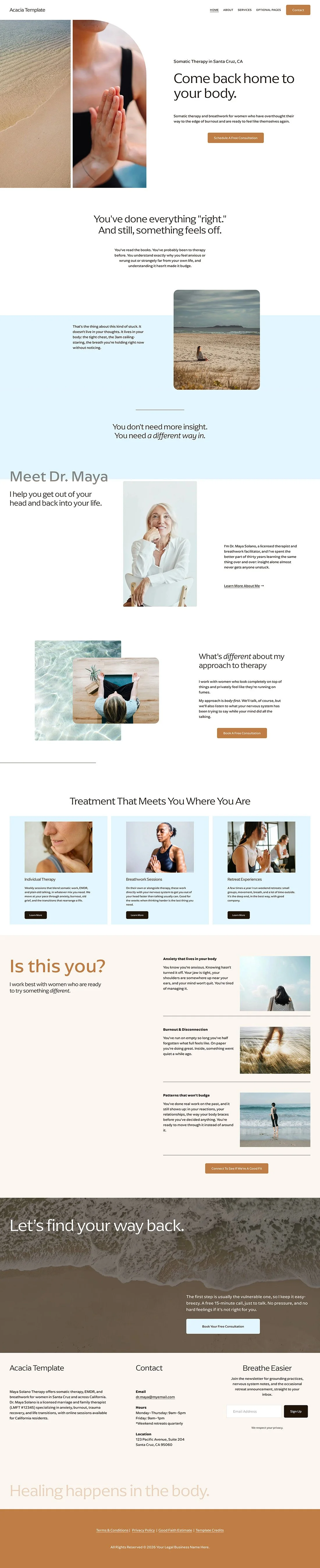
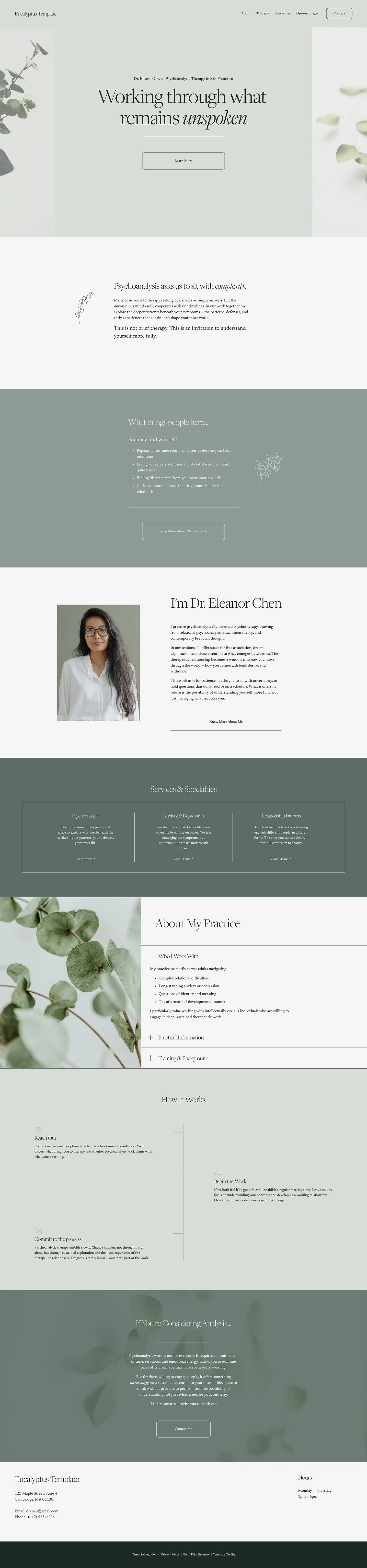
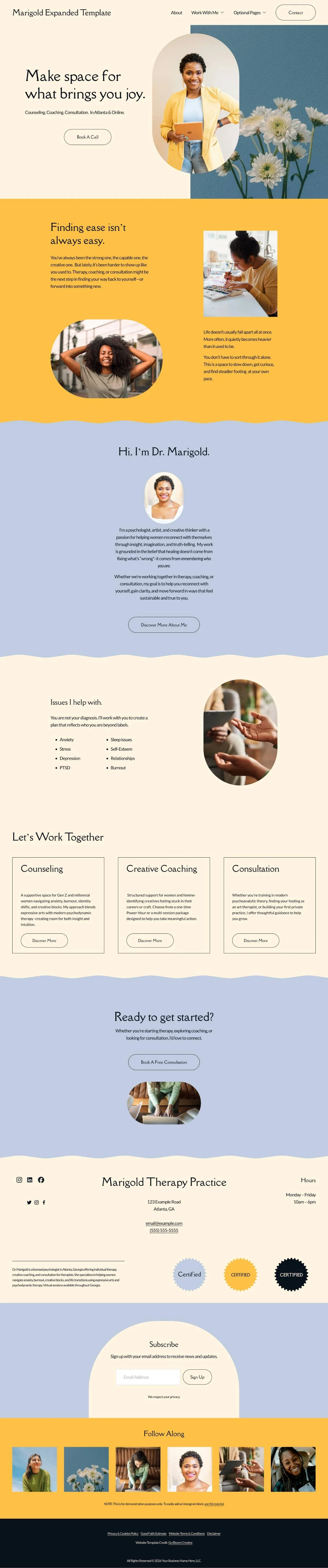
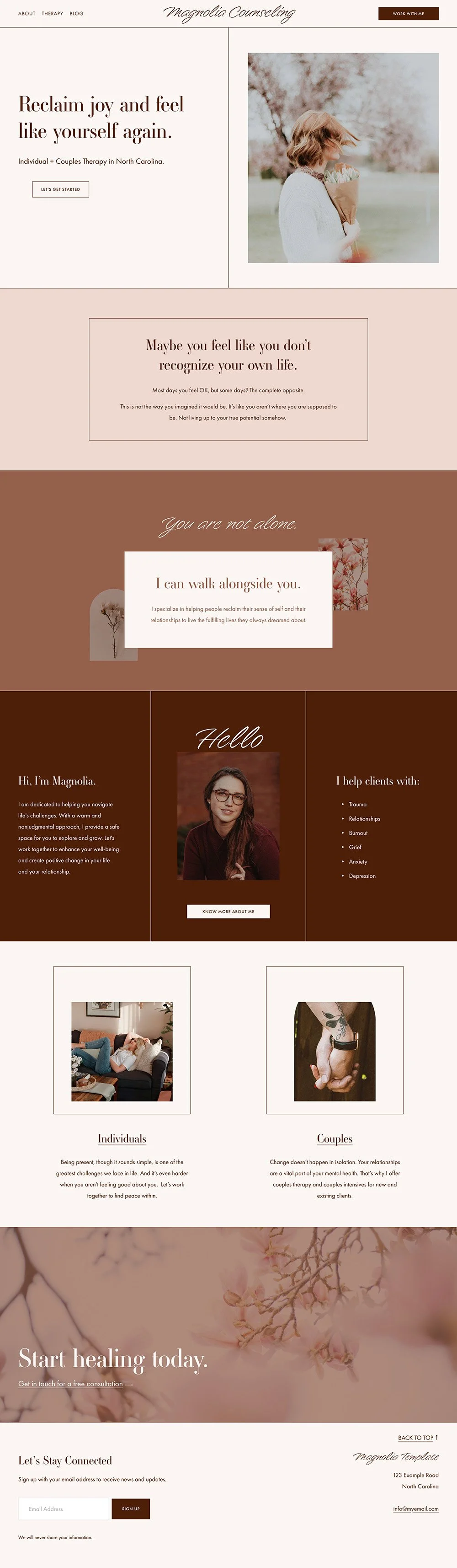
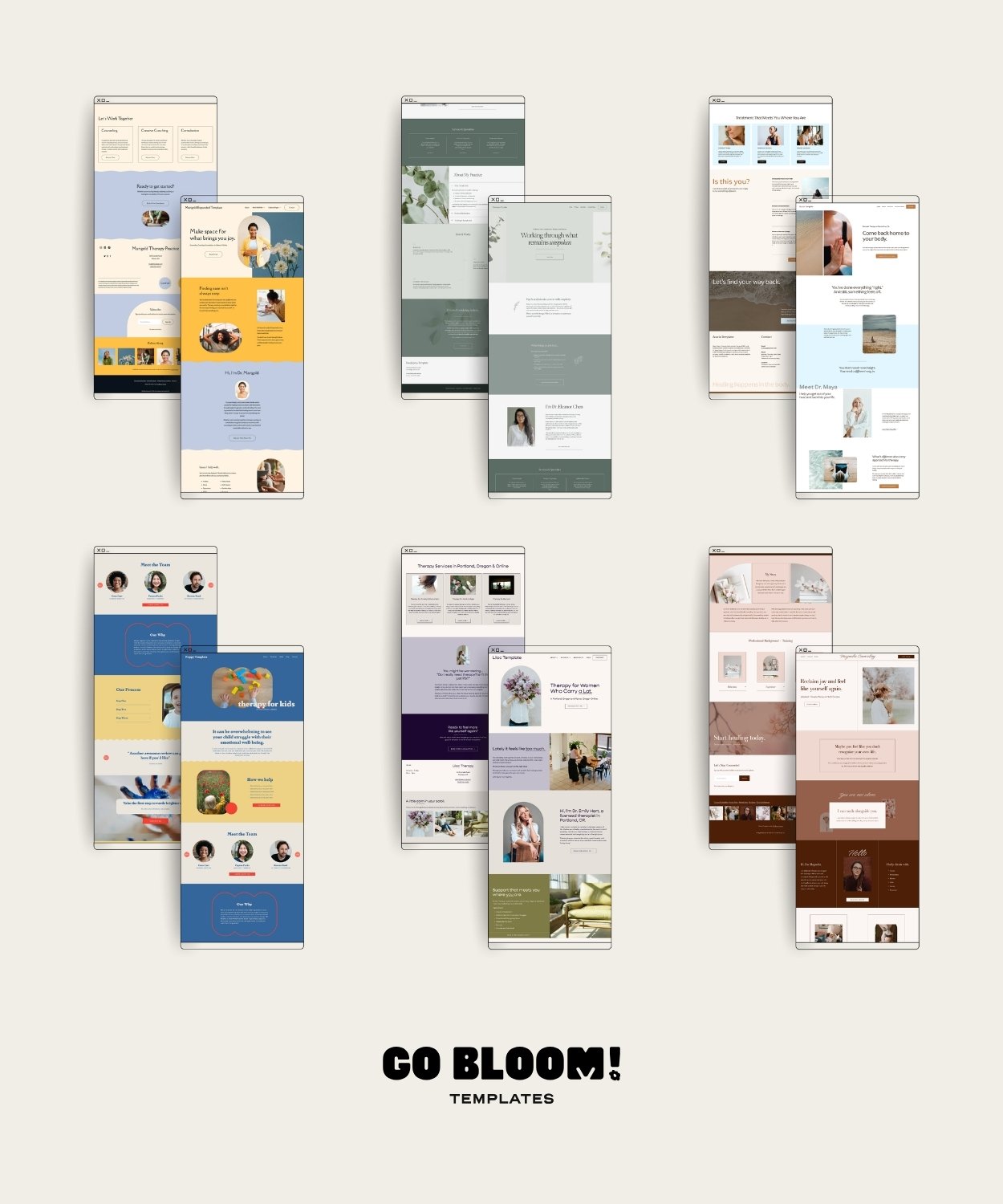
Create a website using a website template for therapists. If you don’t have a big budget and you’re willing to dive in an learn something new (and fun, IMO 🤩) then a website template may be perfect for you. Therapists really can do this without any design background. Check out these examples of therapists using website templates for proof!
Get a website template and book a Live Support Session. It’s a hands-on, action-packed hour where we dive in to your site together to polish everything up. You’ll walk away not only having gotten fixes for your site, but you’ll have learned how to manage your site yourself. Here’s two examples of recent sites where we did just that: Mindful You Healthcare and Christina Desrochers, LMHC.
Look for a designer who offers a “VIP day” or a “Design Day” this might be a good in-between from a full-overhaul if you don’t have the budget for that right now.
Hire a web designer who specializes in therapists (like me!).
Bottom line: There are many ways to get a website! I created this guide: How Much Does a Website Cost? to show you different options you have at different budgets.
Problem #5 Your site just doesn't feel like you
Sometimes the problem isn't traffic, or fit, or conversion. It's that every time you send someone to your website, you feel a little embarrassed. Maybe it's several years old. Or it just doesn't reflect who you've become. Your practice is thriving, but your website is still introducing you as the therapist you were at the beginning.
That's a completely valid reason to invest in something new.
I want to say that clearly, because I think it sometimes an emotional reason for wanting a new site gets dismissed. You're a professional. You refer clients to your website. Wanting your online presence to actually feel like you doesn't need to be justified.
Possible Solution
Give yourself that permission. And when you're ready to act on it, it helps to come to the table with a few things figured outyour niche, your ideal client, your budget, and a rough sense of timeline. The more clarity you bring to a designer, the more they can actually do for you
Start looking for web designers! There are plenty of web designers who specialize in therapists these days (again, like me! 👋)
So, do you need a designer at all?
Maybe! But maybe what you need is a template with strong bones that's already built for therapists — so the structure is handled and you're focused on making it yours.
Or maybe you're genuinely ready for the full thing. If that's you, let’s talk web design →
Either way, starting with the right diagnosis is ultimately what will help you find the right fit and save time and money.