Should You Use a Template or Hire a Designer for Your Therapy Website?
You know you need a website for your private practice. But, every time you sit down to finally deal with it, you find yourself stuck with the same question: “do I build this thing myself, or do I pay someone to do it for me?”
That question keeps many therapists stuck for months.
As a former therapist, I can’t help but think about what is under the stuckness. From my experience, there are two main fears underlying it:
Fear # 1: You don't want to sink a few thousand dollars into the wrong thing.
Fear #2: You don't want to save money with a template, only to end up with a result you don’t want–either a site that looks generic or one that doesn’t look professional (because you didn’t have the skills to DIY it).
So let's get you unstuck. Today I’ll walk through how to decide with path to take, once and for all.
The short version: for most solo therapists and small practices, a template built specifically for therapists will get you about 90% of the way to a custom result, for a small fraction of the price. Hiring a custom designer makes real sense in a handful of specific situations, and I'll name them, because sometimes it's the right call. For most of you, it isn't the call you need to make.
The three paths to getting your website done
When people say "template or designer," they're picturing two options. But there are really three.
Path #1: Start with a generic Squarespace or Wix template and customize it to make it therapist-friendly. Free to start, but the most work on your end. Requires you to figure it out on your own.
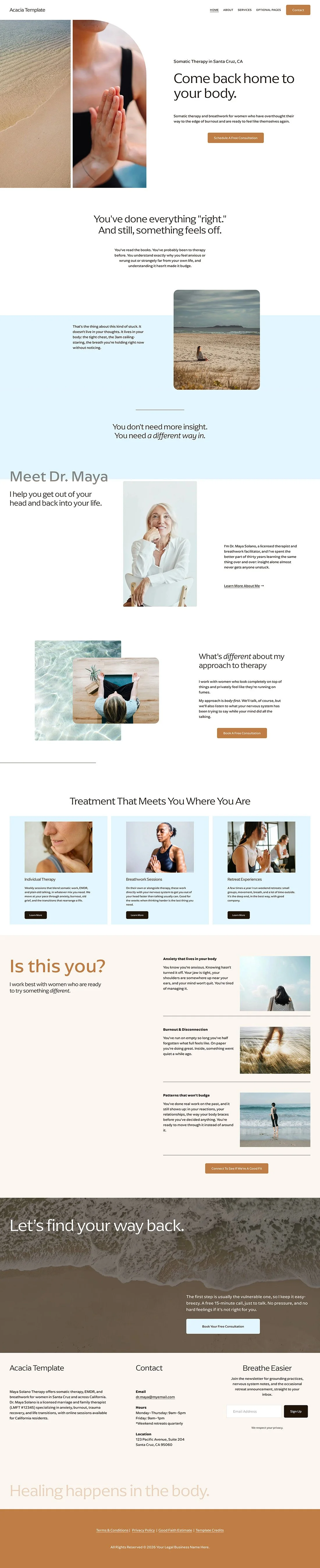
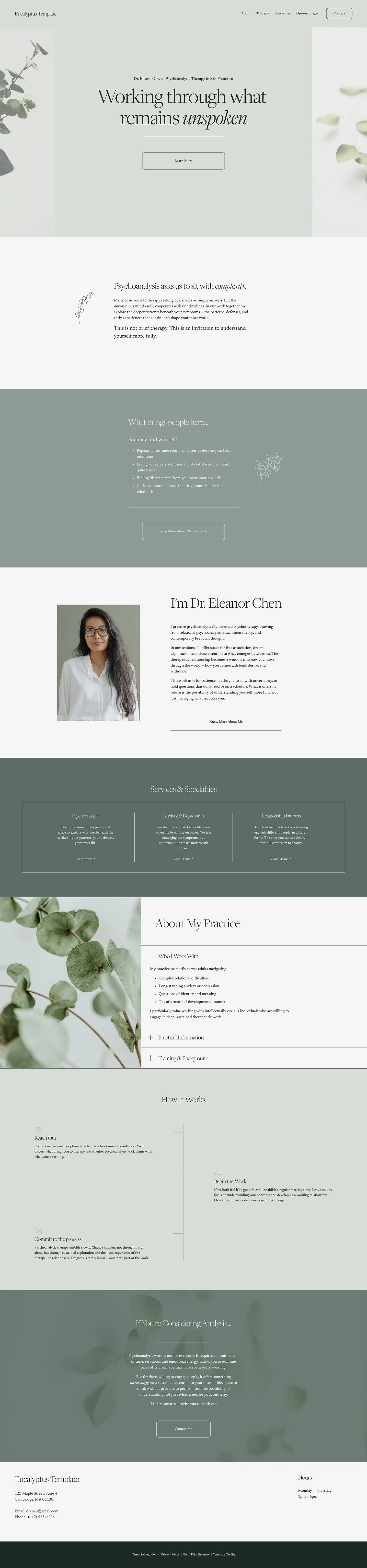
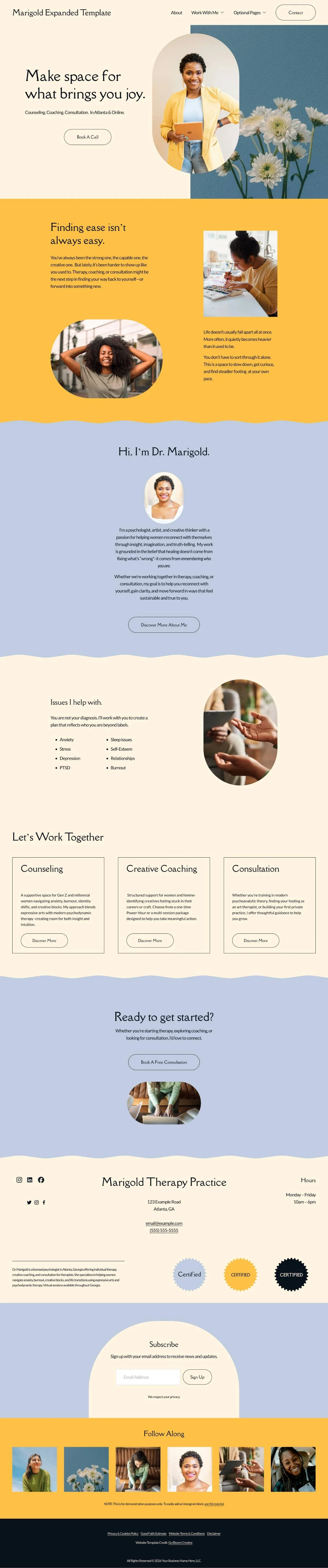
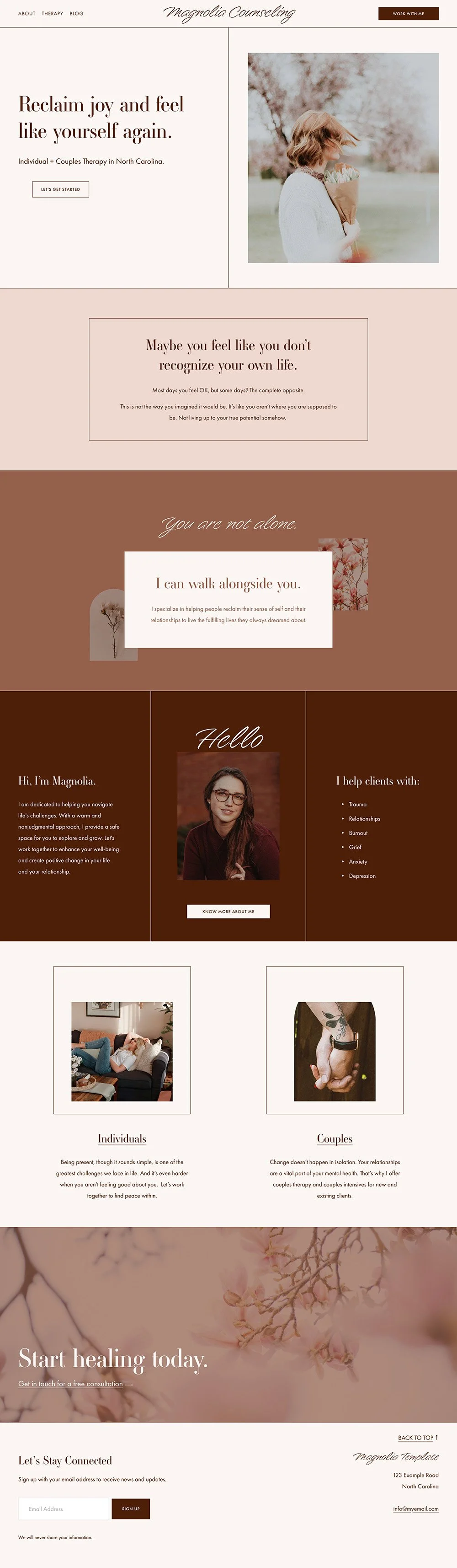
Path #2: Buy a template built specifically for therapists. The middle ground in terms of both cost and time on your end. You get tutorials and support to build it yourself.
Path #3: Hire a custom designer to build something for you. Least amount of work from you, most expensive.
So let’s look at the trade-offs between these three paths, and see which one fits where you actually are right now.
The trade-offs to consider with templates vs. hiring a designer to build your website
#1 The money question (and why it's not the only cost)
Let me give you rough numbers, so we aren’t working in the abstract:
• A generic template is close to free. You're paying for your Squarespace or Wix subscription and that's about it.
• A therapist-specific template runs somewhere in the low hundreds.
• A custom therapy website starts around $3,000 and climbs from there, depending on the studio, and your needs.
But money is only one cost. The other cost is your time.
A generic template is cheap in dollars, but expensive in hours. Hiring a custom designer is the reverse: expensive in dollars, easy on your time. A therapist-specific template sits in the middle on both.
If budget is the thing you're wrestling with (and it’s 100% a realistic concern, especially for those just starting out), I wrote a whole separate post breaking down what a therapist website costs at every level.
How much does a therapist website cost? →
#2 Timeline (how fast do you need this website?)
Generic Template Timeline: It honestly depends on your starting point. Pick a cute template that was designed with a hair salon in mind, and you'll be fighting it the whole way. Pick one built for a nutritionist or a coach, and there's less to undo. No matter which one you grabbed: none of them tell you what a therapy website needs. So you're actually doing the harder job, figuring out what pages you need and what to write on every single one. And that’s how a site ends up sitting half-finished for six months.
Therapist-Specific Template Timeline: Most can get it done in either a weekend, all at once, or a week or two of evenings or blocks between clients. It comes together more quickly, since a lot of the structure and guidance is already done for you.
Hiring a Designer Timeline: A custom project runs weeks to a few months, depending on the designer's queue and how many rounds of revisions you go through.If you need something up quickly, a designer is often the slowest route (which surprises people). The good ones are often booked out for weeks or months (but worth the wait if you can!).
#3 How involved do you want to be?
A template means you do some of the work. You're swapping in your words, your colors, your photos. Some therapists love this part (even have fun with it). Some merely tolerate it. Either way, you are totally in control of the result.
Hiring a custom designer means you answer questions, you give feedback, and someone else does the building and will bring their own unique spin (which can be great as long as you’ve looked at their work and determined you love their style).
So this is kind of a personality thing. Is it hard for you to let go? Or are you like “please take this off my plate”? Are you someone who will want your hands on it, or do you want it handled? Good questions to ask yourself before committing.
#4 The therapy factor: does whoever builds this get your world?
This is probably the one I’m most passionate about. There are plenty of template shops that are therapist-specific. I name some of my favorites in this post: The Best Squarespace Templates for Therapists (Reviewed by a Former Therapist).
I spent seven years as a therapist before I did this work, and if there’s one thing I can say from experience: a therapy website has to do way more than just look pretty.
Its job is to help the right person, often in a really difficult moment, feel like they've found a match. That takes an understanding of client language and ethics. It takes knowing what someone needs to feel and experience before they'll fill out your contact form.
A generic template knows none of that. A custom designer might, if they happen to specialize in therapists, but most don't, and you might spend the whole project explaining your world to them. A therapist-specific template already speaks your language (because someone who knows the language built it).
TLDR: This is the piece that separates a website that gets inquiries from one that just looks nice.
#5 What happens after you launch your site
This is one people might not think to consider.
With a generic template, you're on your own after launch, which is fine if you're comfortable poking around Squarespace on your own.
With a custom designer, it depends entirely on your agreement: some hand you the keys and disappear, some offer ongoing support (often at an ongoing cost).
With a therapist-specific template, you get the design plus a support system to actually finish and maintain it: video tutorials, a writing guide, someone to email when you're stuck.
So look into this before you commit to any path. Launch day is not the finish line. It's the part where you actually start using the thing and where questions can arise.
Template vs. designer at a glance
Generic Template (DIY)
Therapist-specific template
Custom Designer
Cost
Nearly free
Low hundreds
$3000+
Time to Launch
It depends. Can drag on for months
A weekend or a few dedicated evenings
Weeks to months
Your Involvement
High. You build from almost scratch
Medium. You customize it
Low. Someone builds it for you
Therapy-Specific Structure
You create it.
It’s already built-in
Depends on the designer
Content Guidance
None
Included
Sometimes included
After Launch Support
You’re on your own
Tutorials and support included
Varies by designer
Choose this if...
You have time and want full control on a shoestring budget
You want a professional site without a designer's price tag and have time to learn how to customize
You have complex needs and a budget to work with
So which one is right for you?
A therapist-specific template is probably right for you if:
You're a solo therapist or a small practice
You have some budget, but in the hundreds, not the thousands
You're starting out, or rebuilding something that isn't working
You're somewhere on the spectrum of excited to neutral about being involved in the building
You'd like this site to be live in a reasonable timeframe (weeks, not months)
Hire a custom designer if:
You're a larger or group practice with complex, multi-provider needs
You want it fully done for you, with close to zero involvement on your end, and you have the budget for that
You need functionality that goes beyond what a template plus Squarespace can do
You want a fully bespoke brand and you've got several thousand dollars set aside for it
And BTW, it is worth it to save and hire the right person for the job. Someone with experience working with therapists. Someone with a portfolio that matches what you’re looking for. Have a discovery call and make sure you click personality-wise.
This guide might also be a helpful next read: Before you hire a web designer, ask yourself this →
Where a therapist-built template fits (aka the part where I talk about my template shop for a minute)
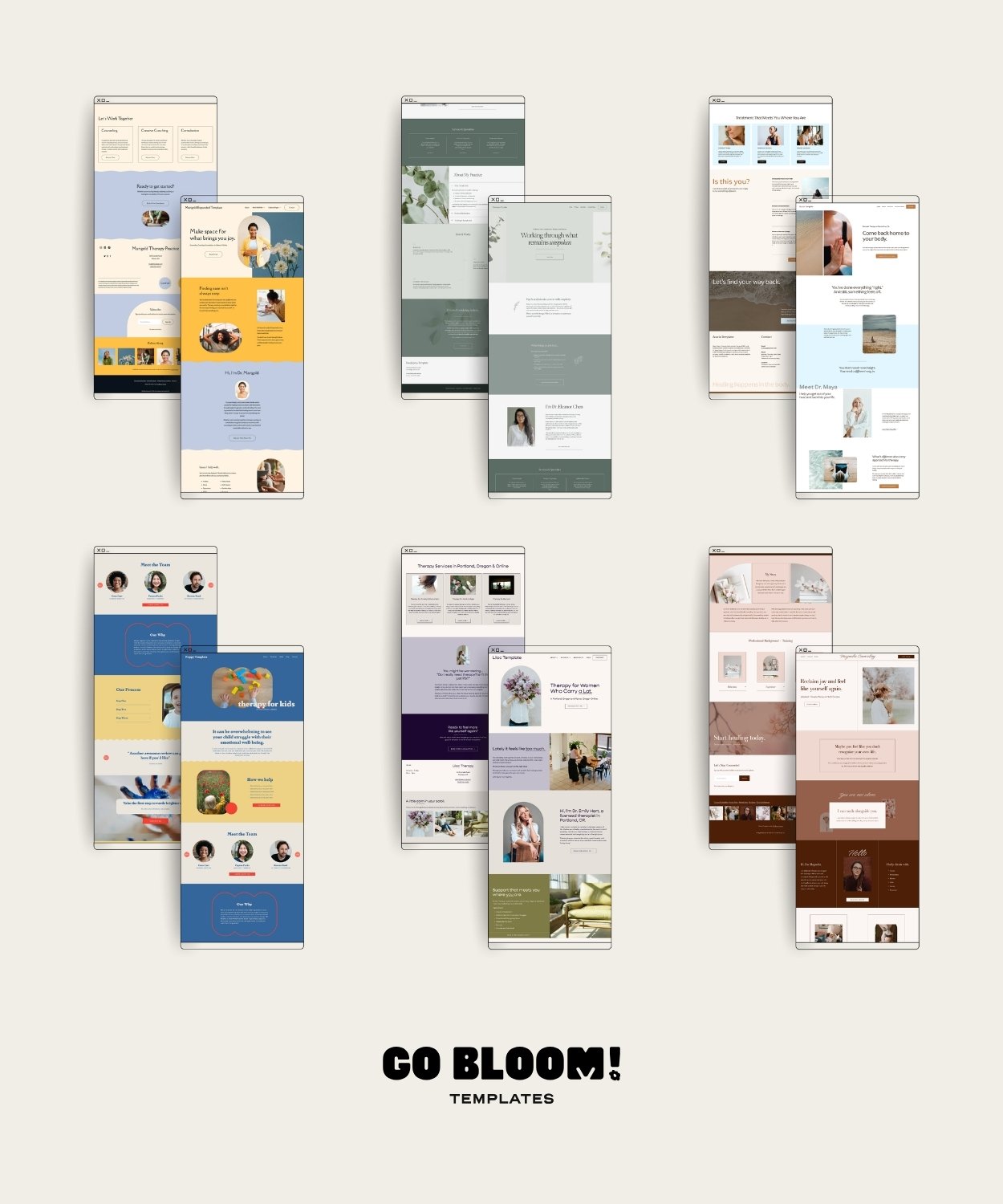
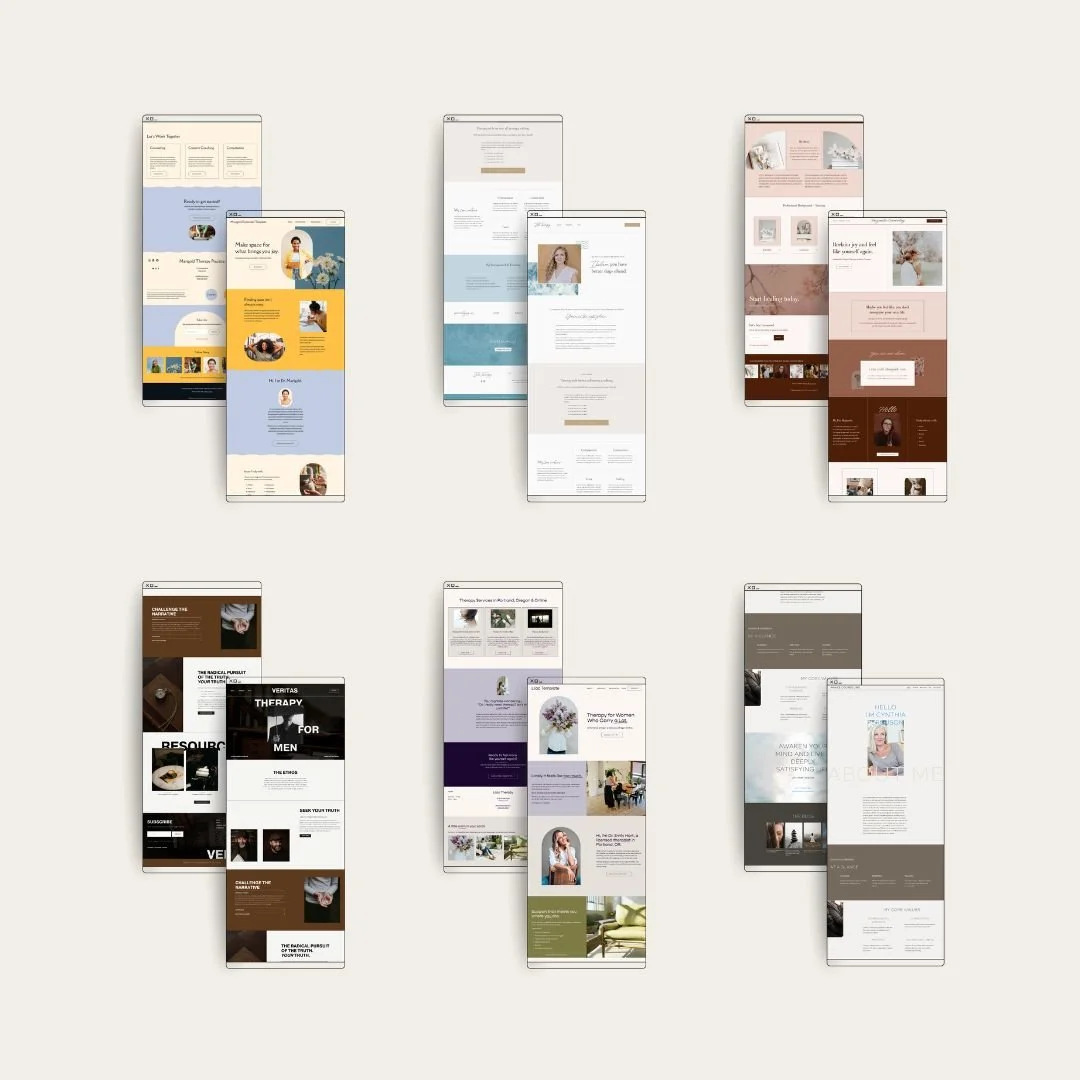
A therapist-specific template sits in the middle of the spectrum. You get the therapy-aware structure and the polished result of custom work, without the four-figure price tag. And when the person who built it happens to be a former therapist (like me, and also other template designers out there), the clinical lens is included.
That's what my templates are. Built by someone who sat in the therapist's chair for over 10 years , made for the therapist who has a whole practice to run and does not have time to become a web designer on the side.
And if you already know a template makes sense but can't tell which one is you, I wrote a post for exactly that: which Go Bloom template is right for you.
A few questions I get asked a lot
-
Customizable, and this is a fair worry given how same-y therapy sites can be. A good template is a starting structure. You change the colors, the fonts, the photos, the words, the imagery. Two therapists can buy the exact same template and end up with sites that feel nothing alike.
-
Yes, and honestly this is the fear underneath most of the others. A template built for non-designers assumes you have never touched Squarespace before. The good ones walk you through every step with video tutorials and skip anything that would require code. You are not signing up to learn web development. The job is swapping your content into a structure that is already sound.
-
You can, and for some people it makes sense (especially if you are more tech-savvy), but let me be straight about what you'd be taking on.
A generic Squarespace template usuall gives you a homepage, an about page, and a contact page, and then it's done.
What it doesn't give you: specialty pages structured around a client's specific struggle, an FAQ page that answers the worries a therapy client actually has, a contact page built to reduce the friction of that first reach-out, or a single word of guidance on what to write in any of it.
None of that is impossible to build yourself. It's just all on you. A therapist-specific template is the same idea with that entire gap already filled in.
-
Good question. Your public-facing website isn't where protected health information lives, so the website itself usually isn't the HIPAA concern people assume it is.
The pieces that do touch client health info, like scheduling and email, are handled through integrations that you can add on, that offer the proper agreements: HIPAA-compliant scheduling (Acuity offers this on the right plan, but lots of people integrate something like Simple Practice) and HIPAA-compliant email through something like Google Workspace or Hushmail.
So yes, you can run a compliant setup on a Squarespace site. Just know that "HIPAA compliance" lives in those specific tools rather than in the template itself.
-
For most people, a week or two of working on it in the evenings (or in empty blocks between clients). Some also just camp out at coffee shop and dedicate a weekend.
It goes faster if you already gathered everything you need (which I can help you with with my Free Website Toolkit)
The design work is done, so your time goes into customizing and writing, not building from zero.
Wondering what to do next?
If you're a solo therapist who wants this done well without a designer's price tag, start with a template. If you have complex needs and the budget for bespoke, hire someone good. And if you're honestly not sure yet, the deciding factor is usually money and involvement: how much do you have to spend, and how hands-on do you want to be.
More Resources
Stuck on the budget side? Read the cost breakdown: how much does a therapist website cost.
Leaning template but frozen on which one? I've got you there too: which Go Bloom template is right for you.
And if you're weighing a template against custom because you're not sure you're ready for either yet, that's worth reading about before you spend a dime: before you buy a template and before you hire a web designer.
Browse Go Bloom Templates